
‘हिम्मत न हारना, मेरे बच्चो!’
मक्सिम गोर्की
For English version please scroll down
As per our best knowledge, this story was not previously available online in complete English text form and existed only as scanned PDF pages. We have now converted it into clean, readable, and searchable text, making it available on our website. (18 Feb 2026)
पावन शान्ति में सूर्योदय हो रहा है और सुनहरे भटकटैया पुष्पों की मधुर सुगन्ध से लहका-महका हुआ नीला-सा कुहासा चट्टानी द्वीप से ऊपर, आकाश की ओर उठ रहा है।
आकाश के नीले चँदोवे के नीचे, अलसाये-उनींदे पानी के काले समतल विस्तार में द्वीप सूर्य भगवान की बलि-वेदी जैसा लगता है।
सितारों की झिलमिलाती पलकें अभी-अभी मुँदी हैं, किन्तु सफ़ेद शुक्र तारा धुँधले-धूमिल आकाश के ठण्डे विस्तार में रोयेंदार बादलों की पारदर्शी पाँत के ऊपर अभी भी जगमगा रहा है। बादलों में हल्का-हल्का गुलाबी रंग घुला हुआ है और पहली सूर्य किरणों में वे हल्के-हल्के चमक रहे हैं। सागर के शान्त वक्ष पर उनका प्रतिबिम्ब बिल्कुल ऐसे लग रहा है मानो कोई सीपी पानी की नीली गहराइयों में से निकलकर ऊपर सतह पर आ गयी हो।
रुपहले ओसकणों से बोझिल हुए घास के डण्ठल और फूलों की पंखुड़ियाँ सूर्य के स्वागत को सिर ऊपर उठाती हैं। शबनम की चमकती हुई बूँदे डण्ठलों के सिरों पर लटकती हैं, बड़ी होती हैं और नींद की गर्मी में पसीने से तर हुई भूमि पर गिर जाती हैं। मन होता है कि उनकी धीमी-धीमी टपटप सुनायी देती रहे और ऐसा न होने पर जी उदास हो जाता है।
पक्षी जाग गये हैं, जैतून के पत्तों के बीच वे इधर-उधर उड़ रहे हैं, चहचहाते हैं और नीचे से सूर्य द्वारा जगा दिये गये सागर की भारी-भारी उसाँसे ऊपर पर्वत तक पहुँच रही हैं।
फिर भी नीरवता है .. लोग अभी सो रहे हैं। सुबह की ताज़गी में फूलों और घासों की गन्ध-सुगन्ध को ध्वनियों की तुलना में अधिक अच्छी तरह से अनुभव किया जा सकता है।
सागर की हरी लहरों से घिरी नाव की भाँति अंगूर-लताओं से घिरे हुए सफ़ेद घर के दरवाज़े से एत्तोरे चेक्को नाम का बूढ़ा सूर्य के स्वागत को बाहर आता है। लोगों से कतराने वाले इस एकाकी बूढ़े के हाथ बन्दरों की तरह लम्बे हैं, उसकी नंगी चाँद किसी बड़े बुद्धिमान जैसी है और उसके चेहरे पर समय ने ऐसा हल चलाया है कि पिलपिली, गहरी झुर्रियों में उसकी आँखें लगभग दिखायी नहीं देती हैं।
अपने काले बालों से ढँके हाथ को धीरे-धीरे माथे तक उठाकर वह गुलाबी होते हुए आकाश को देर तक देखता है, इसके बाद अपने इर्द-गिर्द नज़र दौड़ाता है। उसके सामने, द्वीप की भूरी-बैंगनी चट्टानों पर विस्तृत हरी और सुनहरी रंग-छटा फैली हुई है, गुलाबी, पीले और लाल फूल अपनी चमक दिखा रहे हैं। बूढ़े का साँवला चेहरा मृदुल-मधुर मुस्कान से सिहर उठता है, वह अपने गोल और भारी सिर को झुकाकर अपनी प्रसन्नता प्रकट करता है।
बूढ़ा चेक्को पीठ को तनिक झुकाये और पैरों को फैलाये हुए ऐसे खड़ा है मानो उसने कोई बोझ उठा रखा हो। उसके इर्द-गिर्द नवोदित दिन अधिकाधिक सजता-सँवरता जाता है, अंगूर-लताओं की हरियाली में कुछ अधिक चमक आ गयी है, गोल्डफिंच और सिसकिन चिड़िया अधिक जोर से अपना तराना गा रहे हैं, करौंदों और स्पर्ज के झुरमुटों में बटेर अपने पंख फडप़फ़ड़ा रहे हैं तथा नेपल्ज़वासियों की तरह बाँका-छैला और मस्त-फक्कड़ ब्लैकबर्ड कहीं पर अपनी तान छेड़ रहा है।
बूढ़ा चेक्को अपने थके हुए लम्बे हाथों को सिर के ऊपर उठाकर ऐसे अँगड़ाई लेता है मानो नीचे सागर की ओर उड़ जाना चाहता हो जो जाम में ढली हुई शराब की भाँति शान्त है।
पुरानी हड्डियों को ऐसे सीधा करने के बाद वह दरवाज़े के निकट एक पत्थर पर बैठा जाता है, जाकेट की जेब से एक पोस्टकार्ड निकालता है, पोस्टकार्ड थामे हुए हाथ को आँखों से दूर हटाता है, आँखें सिकोड़ लेता है और कुछ कहे बिना होंठों को हिलाते हुए पोस्टकार्ड को बहुत गौर से देखता है। उसके बड़े, बहुत दिनों से बिना दाढ़ी बने, सफ़ेद खूँटियों के कारण रुपहले-से प्रतीत होने वाले चेहरे पर एक नयी मुस्कान खिल उठती है। इस मुस्कान में प्यार, दुख-दर्द और गर्व – ये सब अजीब ढंग से घुल-मिल गये हैं।
पोस्टकार्ड पर नीली स्याही से चौड़े-चकले कन्धोंवाले दो नौजवानों के चित्र बने हुए हैं। वे कन्धे से कन्धे मिलाये हुए बैठे हैं और मुस्करा रहे हैं। उनके बाल घुँघराले हैं और सिर चेक्को के सिर की तरह बड़े-बड़े। उनके सिरों के ऊपर मोटे-मोटे और साफ अक्षरों में यह छपा हुआ है – “आर्तूरो और एनरीको चेक्को अपने वर्ग-हितों के लिए संघर्ष करने वाले दो शानदार योद्धा। उन्होंने कपड़ा-मिलों के उन 25,000 मज़दूरों को संगठित किया जिनकी मज़दूरी 6 डालर प्रति सप्ताह थी और इसके लिए उन्हें जेल भेज दिया गया।”
“सामाजिक न्याय के लिए संघर्ष करनेवाले जिन्दाबाद!”
बूढ़ा चेक्को अनपढ़ है और उक्त शब्द लिखे भी हुए हैं परायी भाषा में। किन्तु जो कुछ लिखा हुआ है, उसे वह ऐसे ही जानता है मानो हर शब्द से परिचित हो और वह बिगुल की तरह ऊँचे-ऊँचे और गा-गाकर अपना अर्थ बताता हो।
इस नीले पोस्टकार्ड ने बूढ़े के लिए काप़फ़ी चिन्ता और परेशानी पैदा कर दी थी। यह पोस्टकार्ड उसे दो महीने पहले मिला था और पिता की सहज अनुभूति से उसने उसी क्षण यह अनुभव कर लिया था कि लक्षण कुछ अच्छे नहीं हैं। कारण यह कि गरीब लोगों के फ़ोटो तो तभी छापे जाते हैं जब वे कानून का उल्लंघन करते हैं।
कागज के इस टुकड़े को चेक्को ने अपनी जेब में छिपा लिया, लेकिन वह उसके दिल पर एक बोझ सा बन गया और यह बोझ हर दिन बढ़ता चला गया। कई बार उसका मन हुआ कि पादरी को यह पोस्टकार्ड दिखा दे, किन्तु जीवन के लम्बे अनुभव ने उसे इस बात का विश्वास दिला दिया था कि जनता का यह कहना बिल्कुल सही है – “हो सकता है कि लोगों के बारे में पादरी भगवान को तो सच्चाई बताता है, किन्तु लोगों से कभी सच नहीं बोलता।”
इस पोस्टकार्ड का रहस्यपूर्ण अर्थ उसने सबसे पहले लाल बालों वाले एक विदेशी चित्रकार से ही पूछा। लम्बा-तड़ंगा और दुबला-पतला यह जवान चित्रकार अक्सर चेक्को के घर के पास आता था और चित्र-फलक को सुविधाजनक ढंग से टिकाकर आरम्भ किये हुए चित्र की चौकोर छाया में उसके पास ही लेटकर सोया करता था।
“महानुभाव,” उसने चित्रकार से पूछा, “इन लोगों ने क्या हरकत की है?”
चित्रकार ने बूढ़े के बेटों के खिले हुए चेहरों को धयान से देखा और बोला –
“जरूर कोई हँसी-मज़ाक की बात की होगी…”
“इनके बारे में यहाँ क्या छपा हुआ है?”
“यह तो अंग्रेज़ी भाषा में है। अंग्रेज़ों के अलावा उनकी भाषा केवल भगवान ही समझता है। हाँ, मेरी पत्नी भी समझती है, अगर वह इस मामले में सच्चाई बताने की कृपा करेगी। बाकी दूसरे सभी मामलों में तो वह झूठ ही बोलती है…”
चित्रकार सिस्किन पक्षी की तरह ही बातूनी था और शायद किसी भी चीज की गम्भीरता से चर्चा नहीं कर सकता था। बूढ़ा उदास होकर उसके पास से चला गया और अगले दिन उसकी बीवी के पास पहुँचा। बड़ी मोटी-सी यह श्रीमती चौड़ा और पारदर्शी सफ़ेद फ्राक पहने हुए बाग में झूले वाली खाट पर लेटी हुई मानो गर्मी से पिघल-सी रही थी और उसकी नीली आँखे नीले आकाश को नाराजगी से ताक रही थी।
“इन लोगों को जेल भेज दिया गया है,” उसने टूटी-फूटी इतालवी भाषा में बताया।
बूढ़े के पाँव ऐसे काँप उठे मानो किसी झटके से सारा द्वीप ही डोल उठा हो। फिर भी उसने हिम्मत बटोरकर पूछ ही लिया – “इन्होंने चोरी की है या हत्या?”
“नहीं, ऐसा कुछ नहीं। वे तो बस, समाजवादी हैं।”
“कौन होते हैं ये समाजवादी?”
“यह – राजनीति की बात है,” श्रीमती ने दबी-सी आवाज में जवाब दिया और आँखे मूँद लीं।
चेक्को जानता था कि विदेशी सबसे ज्यादा बुद्धू लोग हैं, कलाब्रिया के लोगों से भी अधिक नासमझ। किन्तु वह अपने बेटों के बारे में सच्चाई जानना चाहता था और इसलिए देर तक यह प्रतीक्षा करता हुआ श्रीमती के पास खड़ा रहा कि कब वह अपनी बड़ी-बड़ी और अलसायी आँखों को खोलती है। और आखिर जब ऐसा हुआ तो उसने पोस्टकार्ड पर उँगली रखकर पूछा – “यह ईमानदारी का काम है न?”
“मुझे मालूम नहीं,” उसने खीझा-सा जवाब दिया। “मैं तुमसे कह चुकी हूँ कि यह राजनीति है, समझे?”
नहीं, बूढ़ा चेक्को यह समझने में असमर्थ था। बात यह थी कि रोम में मंत्री और धनी-मानी लोग राजनीति का इसलिए उपयोग करते थे कि गरीब लोगों से ज्यादा टैक्स ऐंठ सके। लेकिन उसके बेटे तो मज़दूर थे, अमरीका में मज़दूरी करते थे, भले नौजवान थे – उन्हें क्या मतलब हो सकता था राजनीति से?
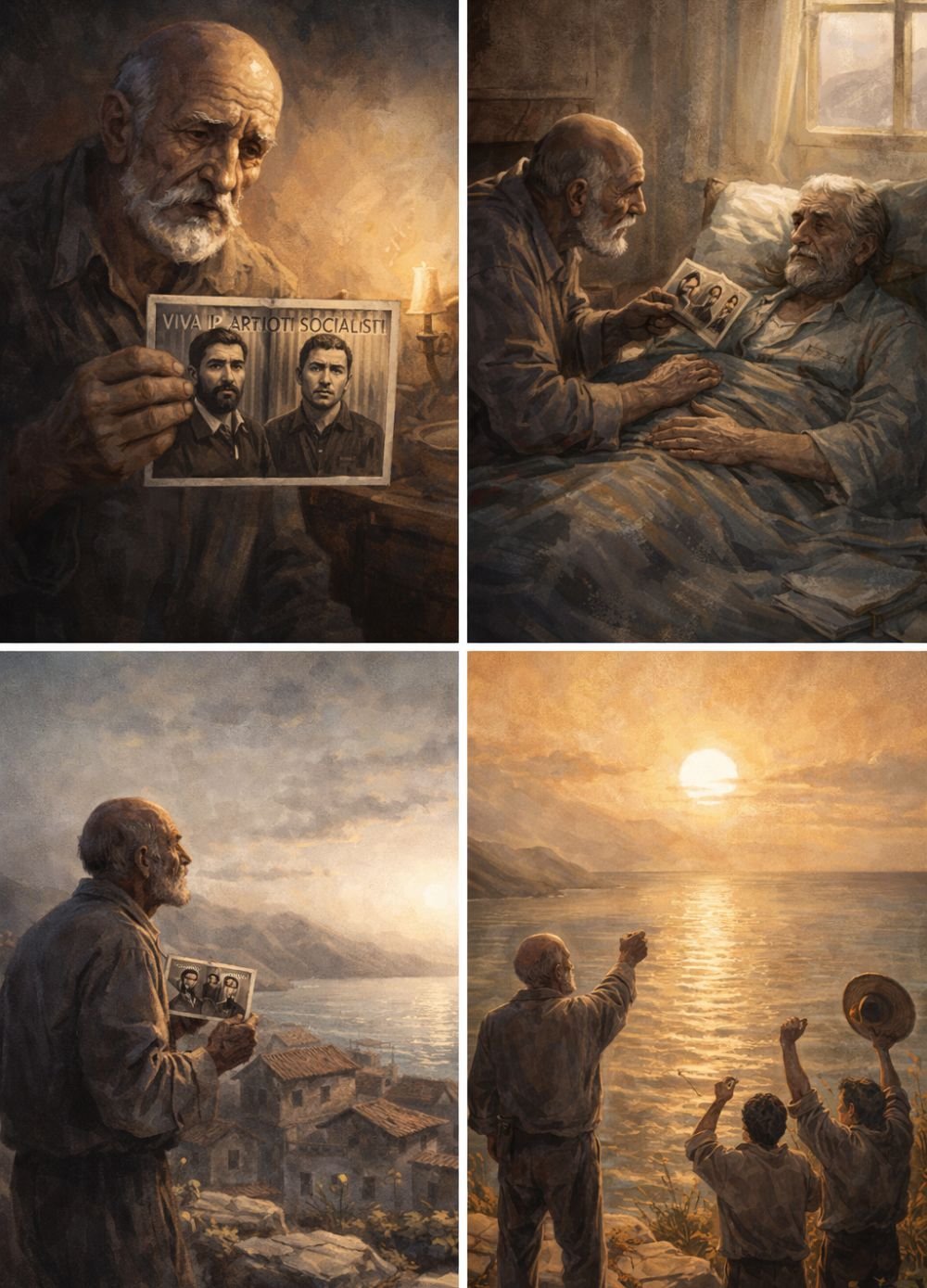 बेटों का चित्र हाथ में लिये हुए वह रात भर बैठा रहा। चाँदनी में वह और भी अधिक काला लगता था तथा उसके मन में और भी ज्यादा बुरे-बुरे ख़्याल आते थे। सुबह को उसने पादरी से समाजवादी का मतलब पूछने का निर्णय किया। काला लबादा पहने पादरी ने बड़ी कड़ाई से और नपा-तुला यही उत्तर दिया ..
“समाजवादी – वही लोग हैं जो भगवान की इच्छा से इंकार करते हैं। तुम्हारे लिए इतना जान लेना ही काफ़ी है।”
इसके बाद पहले से भी ज्यादा कड़ाई के साथ इतना और जोड़ दिया –
“तुम्हारी उम्र में ऐसी बातों में दिलचस्पी लेना शर्म की बात है!…”
“यही अच्छा हुआ कि मैंने उसे चित्र नहीं दिखाया, ” चेक्को ने सोचा।
तीन दिन और बीत गये। तब वह बाँके-छैले और चंचल मिज़ाजवाले नाई के पास गया। जवान गधे की तरह हट्टे-कट्टे इस नौजवान के बारे में यह कहा जाता था कि वह पैसों के बदले में उन बूढ़ी अमरीकी औरतों के साथ प्रेम-क्रीडा़ करता था जो मानो सागर-सौन्दर्य का रसपान करने के लिए यहाँ आती थीं, किन्तु जिनका वास्तविक उद्देश्य गरीब इतालवी जवानों के साथ गुलछर्रे उड़ाना होता था।
“हे भगवान!” शीर्षक पढ़ते ही यह घटिया आदमी खुशी से चिल्ला उठा और उसके गालों पर प्रसन्नता की लाली दौड़ गयी। “ये तो मेरे मित्र आर्तूरो और एनरीको हैं! चाचा एत्तोरे, मैं आपको और खुद अपने को भी सच्चे दिल से बधाई देता हूँ! मेरे अपने ही नगर के दो अन्य मशहूर आदमी – कैसे कोई इन पर गर्व किये बिना रह सकता है?”
“फ़ालतू बातें नहीं करो,” बूढ़े ने उसे डाँटा।
लेकिन वह हाथों को जोर से हिलाता-डुलाता हुआ चिल्ला उठा .. “कमाल ही हो गया!”
“उनके बारे में क्या छपा हुआ है?”
“मैं पढ़ तो नहीं सकता, लेकिन मुझे यकीन है कि सच्चाइ ही छपी हुई है। गरीबों के बारे में अगर आखिर सच्चाई छापी गयी है तो वे अवश्य ही बड़े वीर होंगे!”
“चुप रहो, तुम्हारी मिन्नत करता हूँ,” चेक्को ने कहा और पत्थरों पर अपने खड़ाउओं को जोर से बजाता हुआ वहाँ से चला गया।
वह उस रूसी महानुभाव के पास गया जिसके बारे में कहा जाता था कि वह दयालु और ईमानदार आदमी है। वह उसकी चारपाई के पास बैठ गया जिस पर लेटा हुआ वह धीरे-धीरे मृत्यु-द्वार की ओर बढ़ रहा था। उसने रूसी से पूछा ..
“इन लोगों के बारे में यहाँ क्या लिखा गया है?”
बीमारी से बुझी-बुझी और दुख में डूबी आँखों को सिकोड़कर रूसी ने धीमी-धीमी आवाज में वह पढ़ा जो पोस्टकार्ड में लिखा हुआ था और फि़र बूढ़े की ओर देखकर खूब खुलकर मुस्करा दिया। बूढ़े ने रूसी से कहा – “महानुभाव, आप देख रहे हैं कि मैं बहुत बूढ़ा हो चुका हूँ और शीघ्र ही अपने भगवान के पास चला जाऊँगा। वहाँ जब मदोन्ना मुझसे यह पूछेगी कि मेरे बच्चों का क्या हालचाल है, तो मुझे सब कुछ सच-सच और सविस्तार बताना होगा। इस पोस्टकार्ड में मेरे बेटों की फ़ोटो है, लेकिन मेरी समझ में नहीं आ रहा कि उन्होंने क्या किया है और क्यों वे जेल में हैं?”
तब रूसी ने बहुत गम्भीरता से उसे यह सीधी-सादी सलाह दी ..
“मदोन्ना से कह दीजियेगा कि आपके बेटों ने उसके बेटे (यानी ईसा मसीह) के मुख्य आदेश का सार बहुत अच्छी तरह समझ लिया है – वे अपने निकटवालों को सच्चे मन से प्यार करते हैं….”
झूठ को सीधे-सादे ढंग से नहीं कहा जा सकता – उसके लिए भारी-भरकम शब्दों और अनेक अलंकारों की आवश्यकता होती है। इसलिए बूढ़े ने रूसी की बात पर यकीन कर लिया और उसके छोटे से, श्रम से अछूते हाथ से अच्छी तरह हाथ मिलाया।
“तो इसका यह अर्थ है कि जेल में होना उनके लिए कोई शर्म की बात नहीं है?”
“नहीं,” रूसी ने उत्तर दिया। “आप तो जानते ही हैं कि अमीरों को सिर्फ़ तभी जेल भेजा जाता है जब वे बहुत ही ज्यादा बुराइयाँ करते हैं और उन पर पर्दा नहीं डाल पाते। लेकिन गरीब जब जरा-सी भी बेहतरी चाहते हैं तो उसी वक्त जेल में बन्द कर दिये जाते हैं। आपसे मैं सिर्फ़ यही कह सकता हूँ कि आप बहुत खुशकिस्मत बाप हैं!”
और अपनी क्षीण आवाज में वह देर तक चेक्को को यह बताता रहा कि सच्चे और ईमानदार लोगों के दिमागों में कैसी-कैसी बातें हैं, कैसे वे निर्धनता, मूर्खता-अज्ञानता और उस सभी कुछ को ख़त्म करना चाहते हैं, जो भयानक और बुरा है और जो मूर्खता और निर्धनता को जन्म देता है…
अग्नि-पुष्प की तरह सूर्य आकाश में चमक रहा है, चट्टानों के भूरे वृक्ष पर अपनी किरणों का स्वर्ण-पराग बिखरा रहा है और पत्थर की हर दरार में से जीवन के लिए लालायित हरी घास और आकाश की तरह आसमानी रंग के फूल सूर्य की ओर उठ रहे हैं। सूर्य-प्रकाश की स्वर्ण-रश्मियाँ चमचमा उठती हैं और स्फटिक ओस की मोटी-मोटी बूँदों में लुप्त हो जाती हैं।
बूढ़ा देखता है कि कैसे उसके इर्द-गिर्द सभी कुछ सूर्य के जीवन देने वाले प्रकाश को अपनी साँसों में भरता है, उसे पीता है, पक्षी कैसे दौड़-धूप करते हैं, और घोंसला बनाते हुए गाते-चहचहाते हैं। उसे अपने बेटों की याद आती है, जो महासागर के पार महानगर की जेल में बन्द हैं। उनके स्वास्थ्य के लिए यह बुरा है, हाँ, बहुत बुरा है…
लेकिन वे सिर्फ़ इसलिए जेल में हैं कि वैसे ही ईमानदार बने हैं जैसा कि वह खुद यानी उनका पिता जीवन भर रहा है। यह उनके लिए और उनके पिता की आत्मा के लिए अच्छा है।
और बूढ़े का साँवला चेहरा गर्वीली मुस्कान में पिघलता-सा प्रतीत होता है।
“धरती समृद्ध है, लोग दरिद्र हैं, सूर्य दयालु हैं, मानव क्रूर है। जिन्दगी भर मैं इसी के बारे में सोचता रहा हूँ और यद्यपि मैंने उनसे कभी कुछ नहीं कहा, फि़र भी वे मेरे विचारों को समझ गये। हफ्ते में छः डालर – ये तो चालीस लीरा हुए, अरे वाह! लेकिन उन्हें लगा कि यह मजदूरी कम है और उनके जैसे पच्चीस हजार अन्य मजदूर भी उनसे सहमत हो गये कि जो लोग ढंग से रहना चाहते हैं, उनके लिए छः डालर कम हैं…
उसे विश्वास है कि उसके बच्चों के रूप में वे विचार विकसित और फले-फूले हैं जो उसके हृदय में छिपे रहे हैं। उसे बड़ा गर्व है इस बात पर, किन्तु वह जानता है कि हर दिन खुद अपने द्वारा गढ़े गये किस्सों में लोग कितना कम विश्वास करते हैं, इसलिए वह कुछ कहता नहीं, चुप रहता है।
हां, कभी -कभी उसका बूढ़ा विशाल हृदय अपने बेटों के भविष्य से सम्बन्धित विचारों से ओतप्रोत हो उठता है और तब बूढ़ा चेक्को अपनी थकी और श्रम से झुकी हुई पीठ को सीधा करता है, छाती तानता है और अपनी बची-बचायी शक्ति बटोरकर सागर की ओर मुँह करके बहुत दूर, अपने बेटों को सम्बोधित करते हुए चिल्लाता है ..
“वाल्यो-ओ!” (“हिम्मत ना हारना, मेरे बच्चो!”)
उस क्षण सागर के गाढ़े और कोमल पानी के ऊपर अधिकाधिक ऊँचा उठता हुआ सूरज हँस देता है तथा अंगूर के बगीचों में काम करने वाले लोग बूढ़े की आवाज़ का उत्तर देते हुए जोर से कहते हैं –
“ओह-हो-हो!”
Story – Old Cecco
Maxim Gorky
The sun rises amid a hallowed silence, and a bluish mist, heavy with the sweet scent of the golden furze, floats skyward from the rocky island.
Standing in the midst of the dark mass of sleepy water under the pale cupola of the sky, the island is like an altar to the Sun God.
The stars have just faded, but white Venus still shines alone in the chill vastness of the dim sky above a delicate ridge of fluffy clouds. The clouds are tinged faintly with pink and glow softly in the light of the first beam, and their reflection on the tranquil bosom of the sea is like mother-o’-pearl that has risen to the surface from the blue deeps.
The blades of grass and the petals of the flowers laden with silvery dew reach out toward the sun. The shining drops of dew hanging at the tips of the stalks swell up and fall to the ground which has perspired in its sleep. One waits to hear the soft tinkling sound of their fall, and grieves when he fails to hear it.
The birds are up and flitting about among the olive leaves singing their morning song, and from below come the heavy sighs of the sea awakened by the sun.
Nevertheless it is quiet, for the people are still asleep. In the freshness of early morning the scent of the flowers and grasses is stronger than sound.
From the doorway of a little white house so overgrown with vines that it looks like a boat lashed by green waves, old Ettore Cecco comes out to meet the sun. A lonely little old man, with the long arms of a monkey, the bare skull of a sage, and a face so furrowed by time that his eyes are almost completely hidden in the wrinkled skin.
Raising his black hairy hand slowly to his forehead he looks up at the pink sky and surveys the scene around him: the rich gamut of emerald and gold, the rose, yellow and red of the blooms against the greyish-purple of the rocks. His dark face quivers in a gentle smile, and he nods his round, heavy head in approval.
He stands as though supporting some heavy weight, his back slightly bent, his legs wide apart, and around him the young day glows and sparkles, brighter shines the green of the vines, louder sounds the twittering of the gold finches; the quails flutter among the blackberry and spurge thickets, and somewhere a blackbird, as jaunty and carefree as a Neapolitan, whistles a merry note.
Old Cecco raises his long weary arms above his head and stretches himself as if about to fly down into the sea which is as calm as wine in a chalice.
Having stretched his old bones, he lowers himself on to a boulder beside the door, takes a postcard out of his jacket pocket, holds it away from him and gazes long at it with narrowed eyes, his lips moving soundlessly. His large face with its silvery bristle lights up in a new smile, a smile in which love, sorrow and pride are strangely mingled.
Before him on the slip of pasteboard is a drawing in blue ink of two strapping lads, seated side by side and smiling gaily, two young men with curly hair and large heads like Old Cecco’s. On top of the card in large clear type are the printed words:
“Arturo and Enrico Cecco, two noble champions of the interests of their class.
They organized 25,000 textile workers who earned 6 dollars a week, and for this they were thrown into prison.
Long live the fighters for social justice!”
Old Cecco cannot read, moreover the caption is printed in a foreign language, but he knows what it says, every word is familiar to him, every word is like a trumpet blast.
This blue postcard has brought the old man much trouble and anxiety. He received it two months ago, and his paternal instinct told him at once that something was amiss: the portraits of poor men are printed only when they break the law.
Cecco hid the slip of paper in his pocket, but it lay there like a heavy weight against his heart, and it grew heavier from day to day. More than once he was about to show it to the priest, but long experience had taught him that people are right when they say: “A priest may speak the truth to God about man, but never the truth to man!”
The first person he asked to explain the mysterious significance of the postcard was a red-haired artist, a long, lanky foreigner who often came to Cecco’s house. He would set up his easel at a convenient angle and then lie down to sleep beside it, with his head in the square shadow cast by the unfinished painting.
“Signor,” Cecco asked him, “what have these men done?”
The artist glanced at the smiling faces of the old man’s sons and said, “Something jolly, most likely.”
“But what is written here about them?”
“It is in English. Besides the English, no one understands their language except God—and my wife too, if she is telling the truth in this case. In most cases she doesn’t…”
The artist chattered like a magpie; he was evidently incapable of taking anything seriously, and the old man went away in disgust. The following day he went to the stout signora, the artist’s wife. He found her in the garden. Dressed in a flowing gown of some white transparent material, she lay in a hammock, melting in the heat, her blue eyes staring angrily up at the blue sky.
“These men have been sent to prison,” she said in broken Italian.
His legs trembled as if the island had received a heavy blow. Nevertheless, he found the strength to ask:
“Have they stolen something, perhaps, or murdered someone?”
“Oh no. It is simply that they are Socialists.”
“What are Socialists?”
“That’s politics, old man,” said the signora in an expiring voice, and closed her eyes.
Cecco knew that foreigners are very stupid—more stupid even than Calabrians—but he wished to know the truth about his children, and so he stood for a long while beside the signora, waiting for her to open her large, languid eyes. And when at last she did, he asked, pointing with his finger at the postcard:
“Is it honest?”
“I do not know,” she replied resentfully. “It is politics, I told you. Don’t you understand?”
No, he did not understand. Politics was something the ministers and rich men in Rome used to make the poor pay more taxes. But his sons were workers; they lived in America and were fine fellows. What had they to do with politics?
All night long he sat with the portrait of his sons in his hands—they looked very dark in the moonlight, and the old man’s thoughts grew darker still. In the morning he resolved to ask the priest. The man in the black cassock said curtly:
“Socialists are men who deny the will of God. That should be enough for you.”
And as the old man turned to go, he added more sternly still, “You should be ashamed of yourself, taking up with such things at your age!”
“It is well that I did not show him the portrait,” thought Cecco.
A few more days went by. The old man went to the barber, an empty-headed dandy, as sturdy as a young donkey. It was said of him that for money he made love to elderly American women who came to the island avowedly to enjoy the beautiful scenery, but in reality to seek adventures with poor lads.
“Good God!” exclaimed this wicked man when he read the caption, and his cheeks flushed with pleasure. “Arturo and Enrico, my comrades! Oh, I congratulate you, Father Ettore, with all my heart—you and myself! Now I have two more famous countrymen. Is that not something to be proud of?”
“Don’t let your foolish tongue run away with you,” the old man warned him.
But the barber, waving his hands, cried, “Splendid!”
“What is printed here about them?” the old man insisted.
“I cannot read what it says, but I am sure that it is the truth. Poor men must be great heroes if the truth is spoken of them!”
“Hold your tongue, for goodness’ sake,” said Cecco, and stalked off, his wooden shoes clattering violently over the stones.
He went to the Russian signor, of whom it was said that he was a kind and honest man. Cecco came in, sat down by the cot on which the signor lay slowly dying, and asked:
“What is written here of these two men?”
The Russian narrowed his eyes, faded and sorrowful with illness, read the caption on the postcard in a weak voice, and a warm smile lit up his face.
“Signor,” the old man said to him, “you see I am very old, and I shall soon be going to my Maker. When the Madonna asks me what I have done with my children, I shall have to tell her the whole truth. These are my children, but I do not understand what they have done and why they are in prison?”
“You may tell the Madonna,” the Russian advised him earnestly, “that your children understood well her own Son’s chief commandment: they loved their neighbours truly…”
The old man believed the Russian, for lies cannot be uttered in simple language; lies demand fine words and flowery phrases. And he shook the sick man’s small, uncalloused hand.
“Then it is not a disgrace for them to be in prison?”
“No,” said the Russian. “You know that the rich are sent to prison only when they do so much evil that it can no longer be hidden. The poor are sent to prison as soon as they yearn for a little good. You are a lucky father, let me tell you!”
And he spoke to Cecco for a long time, telling him in his thin, weak voice of what honest men were doing in this world to overcome poverty and stupidity, and all the evil and abomination that spring from stupidity and poverty.
The sun burns in the heavens like a flaming flower. It pours the golden dust of its beams on to the grey rocks, and from every chink in the stone life reaches out eagerly to the sun—the green grass and the flowers as blue as the sky. Golden sparks of sunlight flare up and die in the swollen drops of crystal dew.
As he watches every living thing about him drinking in the life-giving sunlight, as he listens to the singing of the birds busily building their nests, the old man thinks of his children, those boys of his on the other side of the ocean sitting behind bars in a big city, and he thinks how bad it is for their health to be in jail, poor lads…
But then he reflects that they are in prison because they have grown up to be honest young men, as their father had been all his life—and he is content, and his bronze face relaxes in a proud smile.
“The earth is rich, men are poor; the sun is kind, man is cruel. All my life I have thought of these things, and though I did not speak to them of all this, they understood their father’s thoughts. Six dollars a week—that is forty lire. Oho! But they thought it too little and twenty-five thousand others like them thought the same—it is too little for a man who wishes to live well…
He is certain that the ideas he cherished in his heart have blossomed out in his children, and he is very proud of the fact; but knowing how rarely men believe in the fairy-tales they themselves weave from day to day, he keeps his thoughts to himself.
Yet sometimes his great old heart overflows with thoughts of his children’s future, and then he straightens his weary back, inhales deeply, and mustering his failing strength shouts hoarsely out to sea, over to where his children are:
“Val-o-o!”*
And the sun laughs as it rises higher and higher over the deep waters of the sea, and the men from the vineyards above echo the old man’s call:
“—o-o!”
* Here: Courage! — Tr.
|
‘मज़दूर बिगुल’ की सदस्यता लें! वार्षिक सदस्यता - 125 रुपये पाँच वर्ष की सदस्यता - 625 रुपये आजीवन सदस्यता - 3000 रुपये ऑनलाइन भुगतान के अतिरिक्त आप सदस्यता राशि मनीआर्डर से भी भेज सकते हैं या सीधे बैंक खाते में जमा करा सकते हैं।
मनीऑर्डर के लिए पताः
मज़दूर बिगुल, द्वारा जनचेतना,
डी-68, निरालानगर, लखनऊ-226020
बैंक खाते का विवरणः Mazdoor Bigul
खाता संख्याः 0762002109003787,
IFSC: PUNB0185400
पंजाब नेशनल बैंक,
निशातगंज शाखा,
लखनऊ
|
आर्थिक सहयोग भी करें! प्रिय पाठको, आपको बताने की ज़रूरत नहीं है कि ‘मज़दूर बिगुल’ लगातार आर्थिक समस्या के बीच ही निकालना होता है और इसे जारी रखने के लिए हमें आपके सहयोग की ज़रूरत है। अगर आपको इस अख़बार का प्रकाशन ज़रूरी लगता है तो हम आपसे अपील करेंगे कि आप नीचे दिये गए बटन पर क्लिक करके सदस्यता के अतिरिक्त आर्थिक सहयोग भी करें।
मज़दूरों के महान नेता लेनिन |






Recent Comments